

A hydrogen fuel-cell trade group wants to put 70,000 heavy-duty fuel cell trucks on California roads by 2035, and build 200 hydrogen stations to support them.
In a press release, the California Fuel Cell Partnership (CaFCP) called this an interim step toward a goal of 100% zero-emission trucks by 2045 that California adopted in 2020.
Heavy-duty trucks represent just 2% of the traffic on California roads, but account for 9% of the state’s greenhouse-gas emissions, 32% of its nitrogen-oxide emissions, and 3% of its particulate emissions, according to the CaFCP. It’s a similar story nationwide, with larger commercial vehicles—usually powered by diesel engines—accounting for outsize levels of emissions.
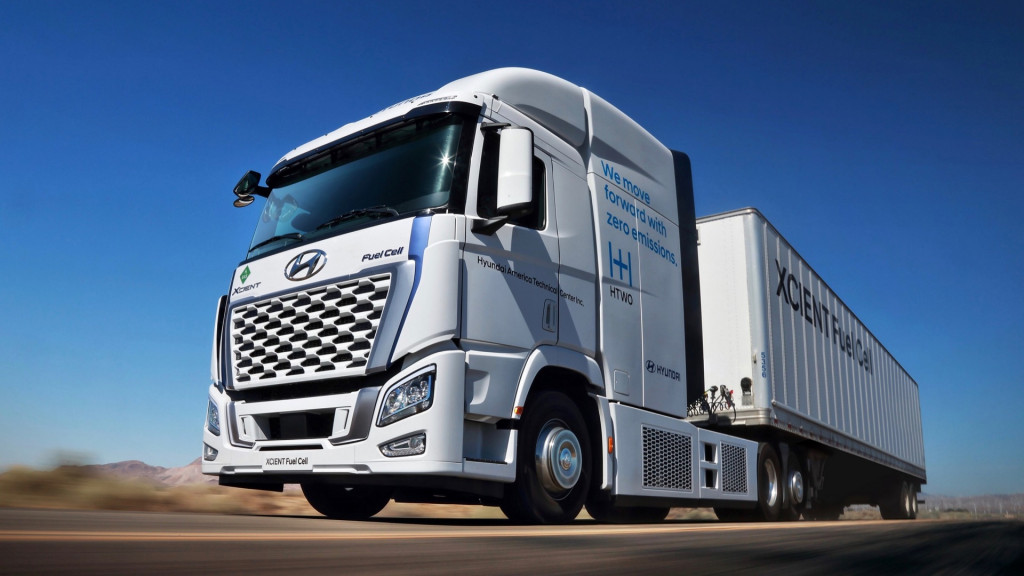
Hyundai Xcient Fuel Cell semi truck to be used in California tests
Stakeholders are increasingly looking to commercial vehicles as an appropriate application for hydrogen fuel cells, which face challenges such as limited fueling infrastructure that have held back sales of fuel-cell passenger cars.
Toyota has been testing a handful of Project Portal prototype trucks in short-haul drayage service at the Ports of Los Angeles and Long Beach for a few years.
Hyundai last month announced plans to test 500-mile fuel-cell semi trucks in California, starting with a 12-month pilot program using two trucks, and continuing in 2023 with a fleet of 30 vehicles. General Motors and Navistar earlier this year announced plans to put 2,000 trucks—also with a 500-mile range—into service in 2024.
Daimler is also planning a hydrogen semi truck for series production later in the decade. This was announced after the company shifted development resources away from Mercedes-Benz passenger cars to commercial vehicles, ahead of an announced spinoff of Daimler Trucks.

Mercedes-Benz GenH2 hydrogen fuel-cell semi truck
However, questions remain over the emissions associated with hydrogen production. Some stations in California continue to buy hydrogen produced with natural gas in Louisiana and Texas and then truck it across the country. Potentially, that could be “blue” hydrogen produced at one of the “hubs” proposed in the bipartisan infrastructure bill, with diesel—or even coal.
The hydrogen network isn’t the only one coming together for tailpipe-emissions-free trucks. Electric utilities, truckmakers, and other stakeholders have allied to create a charging network for battery-electric trucks along the West Coast.
California and the private stakeholders involved don’t have a strong record in meeting targets for passenger-vehicle fuel-cell infrastructure. Will things be any different on the truck side?





0 Comments