

The entire U.S. West Coast now aims to end sales of new gasoline cars by 2035.
Specifically, Washington and Oregon recently enacted rules requiring that new vehicles be mostly emission-free by 2035. These plans, which will permit continued sales of plug-in hybrids that also run on gasoline, align with goals already in place in California.
Both states have already followed California’s lead by adopting the state’s emissions standards, which are stricter than federal standards, albeit at slightly different speeds.

I-5 traffic in Seattle
Washington started to adopt California rules in 2020, after the move gained widespread support in 2019. It backed that up with legislative action to end gasoline car sales earlier this year, but full implementation of the California rules hasn’t occurred yet.
Oregon has been a longtime follower of California’s zero emission vehicle (ZEV) mandate requiring EV sales, and it also this week finalized its adoption of the California rules. That forms a West Coast EV bloc of sorts that will be increasingly challenging for automakers to ignore.
Oregon was also one of the early leaders for fast-charging sites per person and per EV, and it last year started replacing its decade-old West Coast Electric Highway with a second generation of charging equipment. So it’s on track to handle growing numbers of EVs.
![Electric Avenue charging stations in Portland, Oregon [photo: Portland General Electric]](https://images.hgmsites.net/lrg/electric-avenue-charging-stations-in-portland-oregon-photo-portland-general-electric_100532764_l.jpg "Electric Avenue charging stations in Portland, Oregon [photo: Portland General Electric]")
Electric Avenue charging stations in Portland, Oregon [photo: Portland General Electric]
California, however, took the lead in effectively banning the sale of new gasoline passenger vehicles and light trucks that don’t lean on electrification, with a 2020 executive order. That’s largely earned the support of the state’s dealers, as the portion of fully electric vehicles in the state passed 15% earlier this year—up from 5.1% in 2019.
Adoption of these Advanced Clean Cars II rules behind the EV mandate also require a higher electric range for plug-in hybrids—although nothing is stopping plug-in hybrid buyers from choosing to run their vehicles primarily on gasoline.
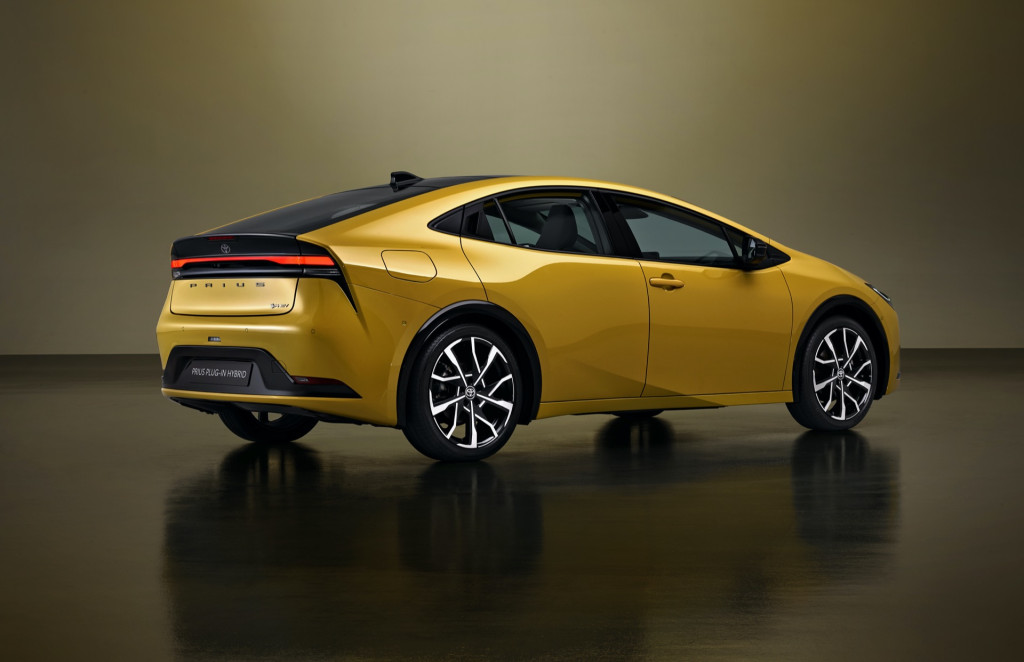
2023 Toyota Prius Prime (Euro spec)
Some states are staking out a middle ground. Colorado, for instance, has aligned with California on emissions rules but recently introduced a comprehensive plan to stimulate a shift to EVs in the state that does not yet include the adoption of California’s ACC II rules.
That said, Vermont is already along for the mandate the West Coast states are adopting. And this week, the entire nation of Canada announced its own proposed 100% ZEV sales target for 2035 that will essentially align it with rules in British Columbia and Quebec, which already represent 35% of that nation’s market.
Despite the lack of a national mandate, as EVs and plug-in hybrids become the new-car norm, and gasoline models the fringe, automakers may see the North American shift with increased urgency.
—
With additional reporting by Bengt Halvorson


0 Comments