

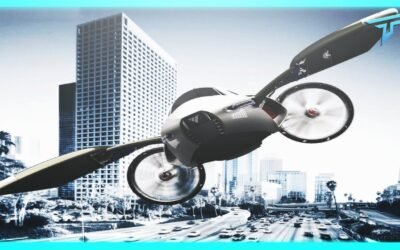
Bell Textron debuted a new taxi concept named Nexus Air Taxi designed to transport both people and goods in an environmentally friendly manner. Nexus Air Taxi was tested as a four-duct version that can operate fully electric or as a hybrid-electric aircraft.
Because so many people use personal cars, to reduce traffic, companies think about public transportation vehicles as a viable solution, growing the number of people that could travel with public vehicles, reducing traffic congestions in big cities, reducing pollution and CO2 emissions, saving public and personal money and all that at higher speeds than today.
Bell Textron debuted a new taxi concept to the public in 2019.
The kind that flies you away to your destination in a “Jetson Family” style.
For the time being, Bell’s futuristic Nexus Air Taxi is only a concept, designed to transport both people and goods in an environmentally friendly manner.
Bell claims that its air taxi can convert a 45-minute drive into a 10-minute flight.
The Nexus Air Taxi was introduced in 2019 as a six-duct vehicle, but Bell later developed and tested a four-duct version that can operate fully electric or as a hybrid-electric aircraft.
The hybrid version would have a greater range.
source


0 Comments